
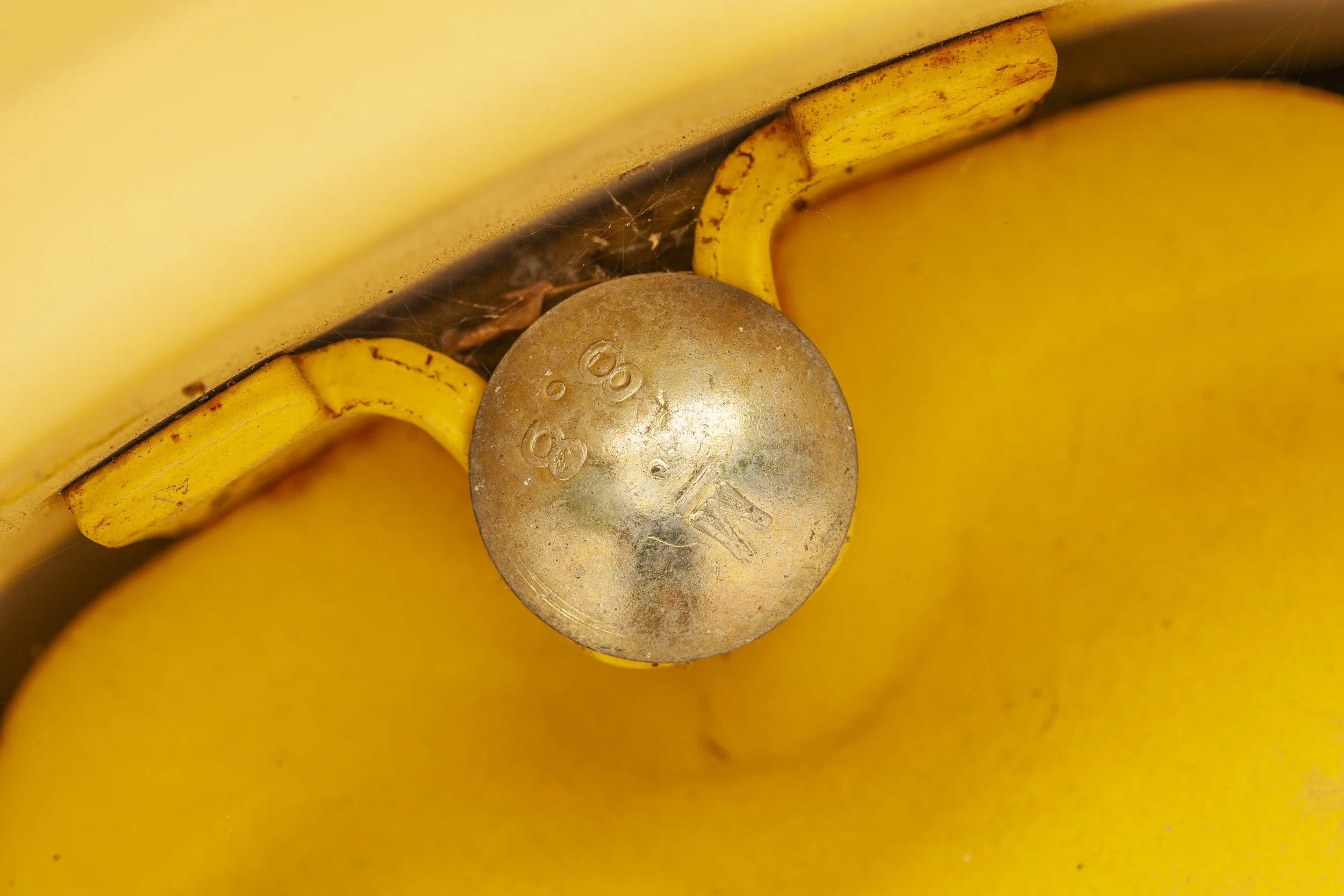
Image Specifications –
Fastener Surface & Reflective Detail Macro Study:
Camera: Canon EOS 5D Mark IV
Lens: Canon Macro 100mm
Technical Settings:
• Aperture: f/8
• Shutter Speed: 1/125 sec
• ISO: 200
• Focus Method: 20-frame multi-stack
• Lighting: Macro Photography Flash Diffuser with Speedlite Flash Diffuser Softbox to manage harsh reflections and sculpt highlights
• Stabilization: Tripod + macro rail
• Lens & Magnification: Macro lens at close-focus distanceDescription: A close-up macro exploration of a metal fastener, emphasizing its engineered geometry and polished surface. This study highlights the interplay of reflections, and specular hotspots. Controlled lighting and precise focus stacking accentuate the three-dimensional form while preserving detail across reflective planes.
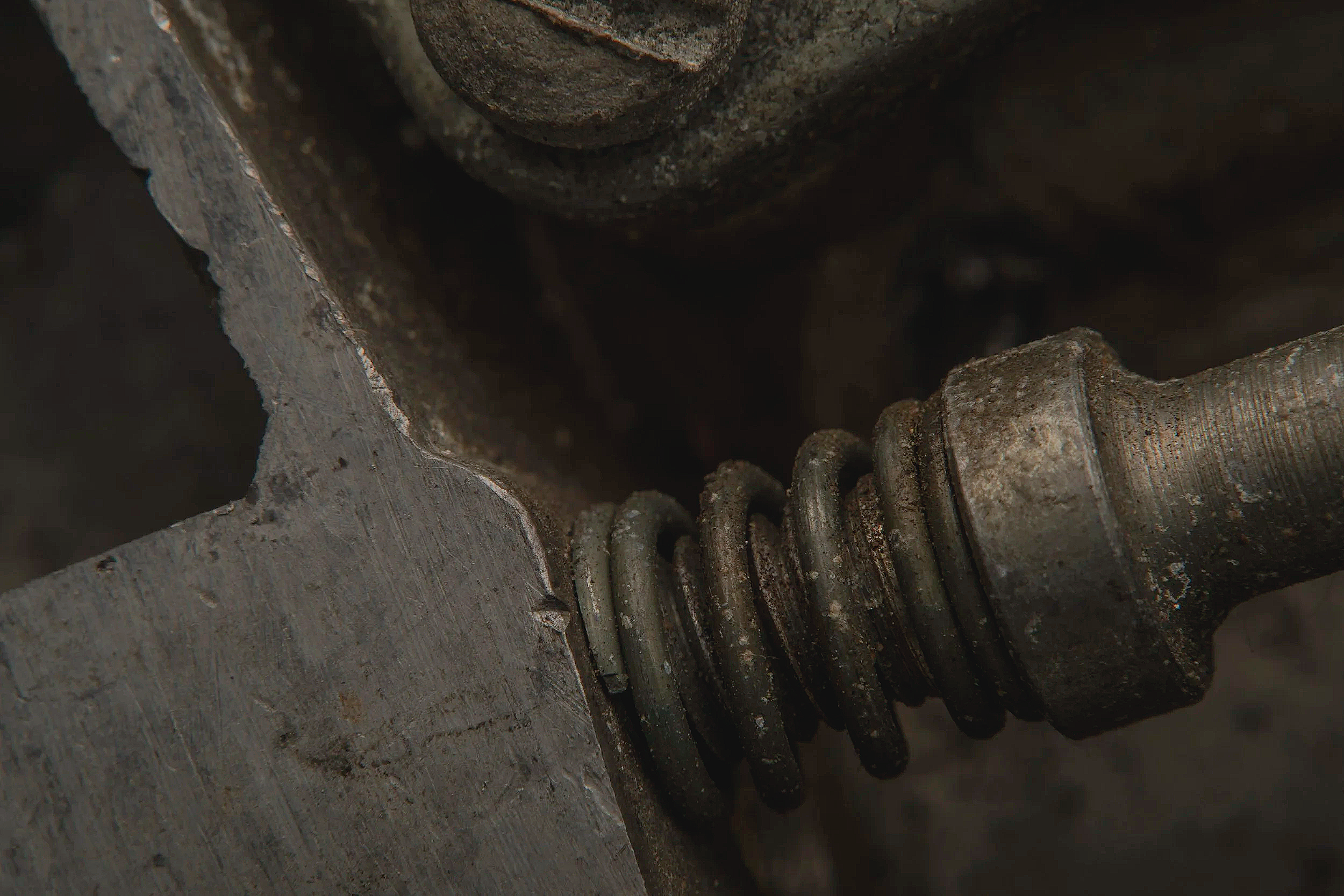
Image Specifications –
Coiled Fastener Macro Study:
Camera: Canon EOS 5D Mark IV
Lens: Canon Macro 100mm
Technical Settings:
• Aperture: f/16
• Shutter Speed: 1/125 sec
• ISO: 200
• Focus Method: 12-frame multi-stack
• Lighting: Macro Photography Flash Diffuser with Speedlite Flash Diffuser Softbox to manage harsh reflections and sculpt highlights
• Stabilization: Timer: Tripod: macro rail
• Lens & Magnification: Macro lens at close-focus distanceDescription: A close-up macro exploration of a metal screw, emphasizing its engineered geometry and polished surface. This study highlights the interplay of reflections, specular hotspots, and micro-texture along the threads and head, revealing subtle surface imperfections and metallic sheen. Controlled lighting and precise focus stacking accentuate the three-dimensional form while preserving detail across reflective planes.
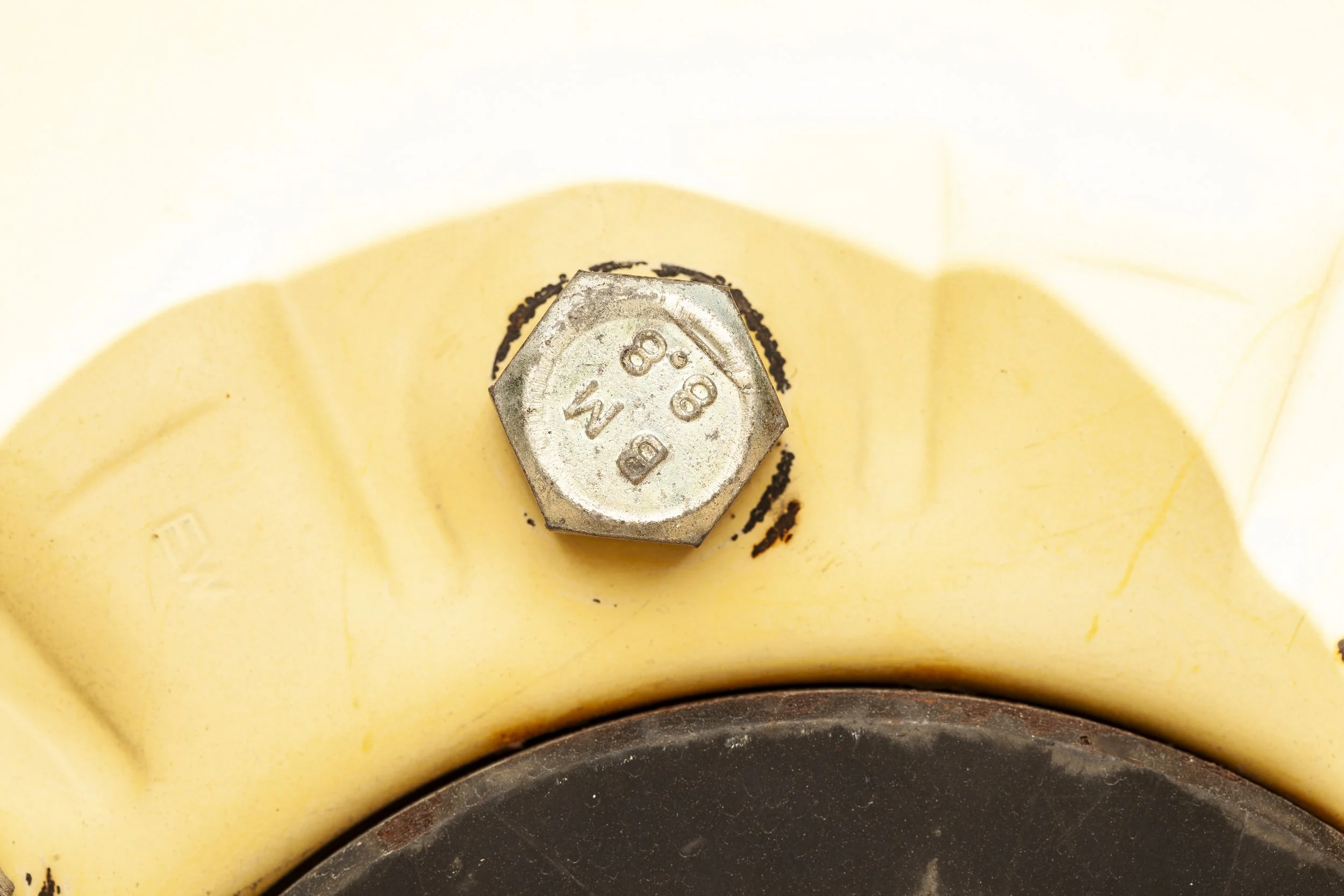
Image Specifications –
Misc. Component Macro Study
Camera: Canon EOS 5D Mark IV
Lens: Canon 24-70mm
Exposure Settings:
ISO: 100
Aperture: f/13 (to maximize depth on metallic structures)
Shutter Speed: 1/160 sec
Focus Stacking: 15 images
Lighting: Macro Photography Flash Diffuser with Speedlite Flash Diffuser Softbox to manage harsh reflections and sculpt highlights
Stability: Tripod-mounted; timer; macro rail
Material: Cast metal housing with steel and brass subcomponents
Application Context: Internal combustion fuel/air metering system
Study Type: Non-destructive visual inspection (macro imaging)
OEM Context: Stellantis-style engineering documentation
Imaging Objective
Document the surface condition, assembly integrity, and visible wear characteristics of a carburetor assembly in as-received condition to support component evaluation, serviceability assessment, and engineering review within an OEM teardown or legacy-system analysis context.
Imaging Methodology
High-resolution macro photography was performed using controlled, diffused strobe lighting to manage specular reflections across mixed metallic surfaces. Multi-frame focus stacking was applied to preserve full depth-of-field across concentric assemblies, fasteners, cable elements, and internal geometry visible from the exterior. Imaging was conducted prior to cleaning, disassembly, or mechanical manipulation to preserve original condition and evidence of use.
Visual Observations
Housing and internal components exhibit uniform concentric alignment with no visible fracture or structural deformation.
Surface oxidation and discoloration observed on exposed metal surfaces, consistent with age-related environmental exposure.
Cable and fastener elements remain intact, with localized surface wear and coating loss visible at contact points.
Deposits and residue present along internal surfaces, consistent with fuel exposure and operational byproducts.
No visible cracking, catastrophic corrosion, or mechanical separation observed within the documented view.
Engineering Interpretation
Observed conditions suggest gradual surface degradation and residue accumulation consistent with operational aging rather than acute mechanical failure. Surface oxidation and deposits may contribute to reduced efficiency, altered airflow or fuel delivery characteristics, and increased maintenance requirements. Visual evidence supports further functional testing or disassembly-based inspection if performance degradation is suspected.
Use Case
Images support:
Non-destructive component inspection
Fuel system component documentation
Wear and contamination assessment
Engineering teardown records
Legacy system evaluation and comparison
Notes & Limitations
This documentation reflects surface-level visual analysis only. No airflow testing, fuel flow analysis, dimensional verification, or internal metrology was performed. Image processing was limited to focus stack compositing and tonal normalization; no alterations affecting structural interpretation were applied.

Image Specifications –
Diez Pesos Macro Study
Camera: Canon EOS 5D Mark IV
Lens: Macro lens 100mm macro
Exposure Settings:
ISO: 100
Aperture: f/10
Shutter Speed: 1/160 sec
Focus Stacking: 10 images per side
Lighting: Macro Photography Flash Diffuser with Speedlite Flash Diffuser Softbox to manage harsh reflections and sculpt highlights
Stability: Tripod-mounted; timer; macro rail
Processing: Focus stacks blended in Adobe Photoshop; front and back aligned and finished for presentation
Dime – Macro Surface Condition & Component Documentation
Component: Dime (U.S. 10-cent coin)
Material: Clad metal composition (Copper core with nickel coating)
Application Context: Circulating currency, collector evaluation, and numismatic study
Study Type: Non-destructive visual inspection (macro imaging)
OEM Context: Stellantis-style engineering documentation
Imaging Objective
Document the surface condition, strike integrity, and visible wear characteristics of a dime in as-received circulated condition to support numismatic assessment, wear analysis, and archival documentation. Imaging aims to capture edge detail, obverse/reverse relief, and surface features without mechanical handling that could alter condition.
Imaging Methodology
High-resolution macro photography was performed using controlled, diffused strobe lighting to manage reflections on metallic surfaces. Multi-frame focus stacking was applied to maintain full depth-of-field across convex and concave regions, rim edges, lettering, and relief features. Imaging was conducted prior to any cleaning or polishing to preserve original condition and evidence of circulation.
Visual Observations
Obverse (front) and reverse (back) surfaces exhibit legible relief elements with minor flattening on high points consistent with circulation wear.
Edge reeding remains largely intact, with localized smoothing on contact points.
Surface exhibits uniform oxidation and toning, consistent with environmental exposure and handling.
Minor scratches, nicks, and microabrasions present across both faces, predominantly along the rim and raised relief areas.
No structural deformation, cracks, or evidence of corrosion-induced delamination observed.
Engineering Interpretation
Observed conditions indicate gradual surface degradation and abrasion consistent with normal circulation wear rather than acute damage. Oxidation and toning patterns suggest exposure to typical environmental conditions. Surface wear may slightly reduce visual relief detail but does not compromise structural integrity. Visual evidence supports further metallurgical or numismatic analysis if grading, authentication, or compositional verification is required.
Use Case
Images support:
Non-destructive numismatic inspection
Circulation wear assessment
Archival documentation of coins for reference or comparison
Collector grading or historical analysis
Notes & Limitations
This documentation reflects surface-level visual analysis only. No compositional testing, hardness measurement, or metallurgical analysis was performed. Image processing was limited to focus stack compositing and tonal normalization; no alterations affecting structural interpretation were applied.

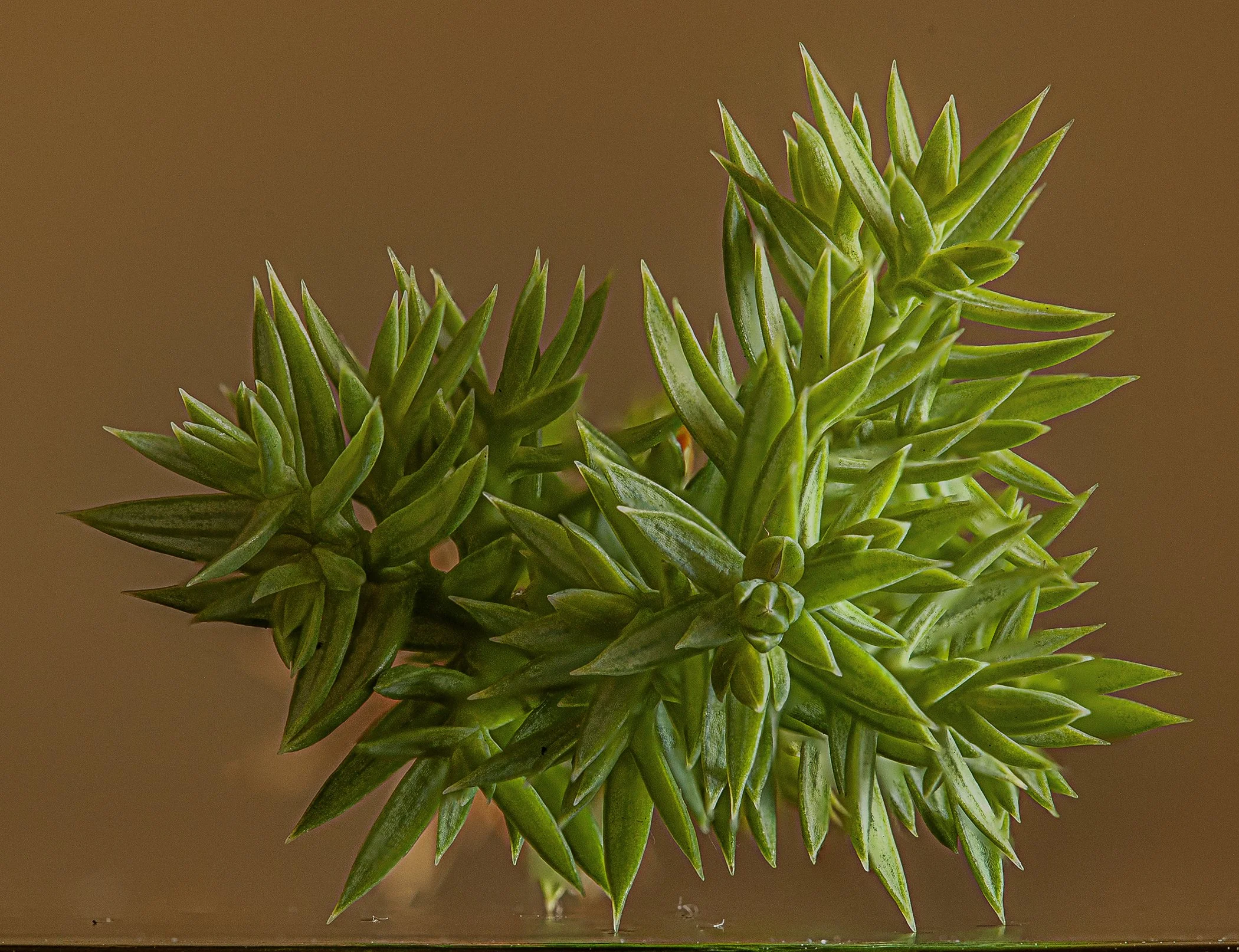
Image Specifications –
Miniature Evergreen Segment Macro Study:
Camera: Canon EOS 5D Mark IV
Lens: Canon Macro 100mm
Technical Settings:
• Aperture: f/8
• Shutter Speed: 1/125 sec
• ISO: 200
• Focus Method: 20-frame multi-stack
• Lighting: Macro Photography Flash Diffuser with Speedlite Flash Diffuser Softbox
• Stabilization: Tripod, timer, macro rail
• Lens & Magnification: Macro lens at close-focus distanceDescription: A detailed macro capture of a tiny, quarter-sized piece of evergreen, showcasing its intricate needles, fine surface textures, and natural geometry.

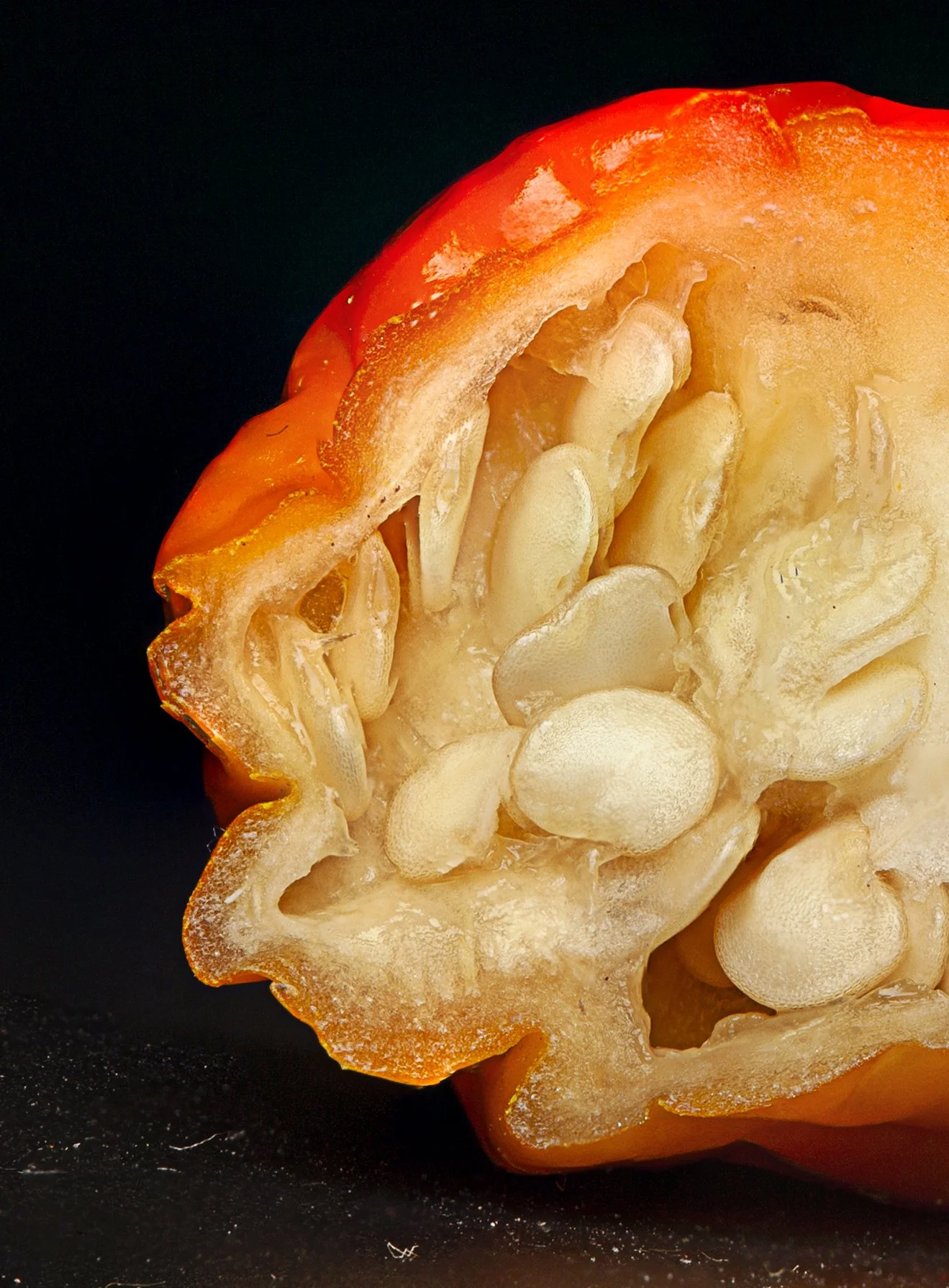
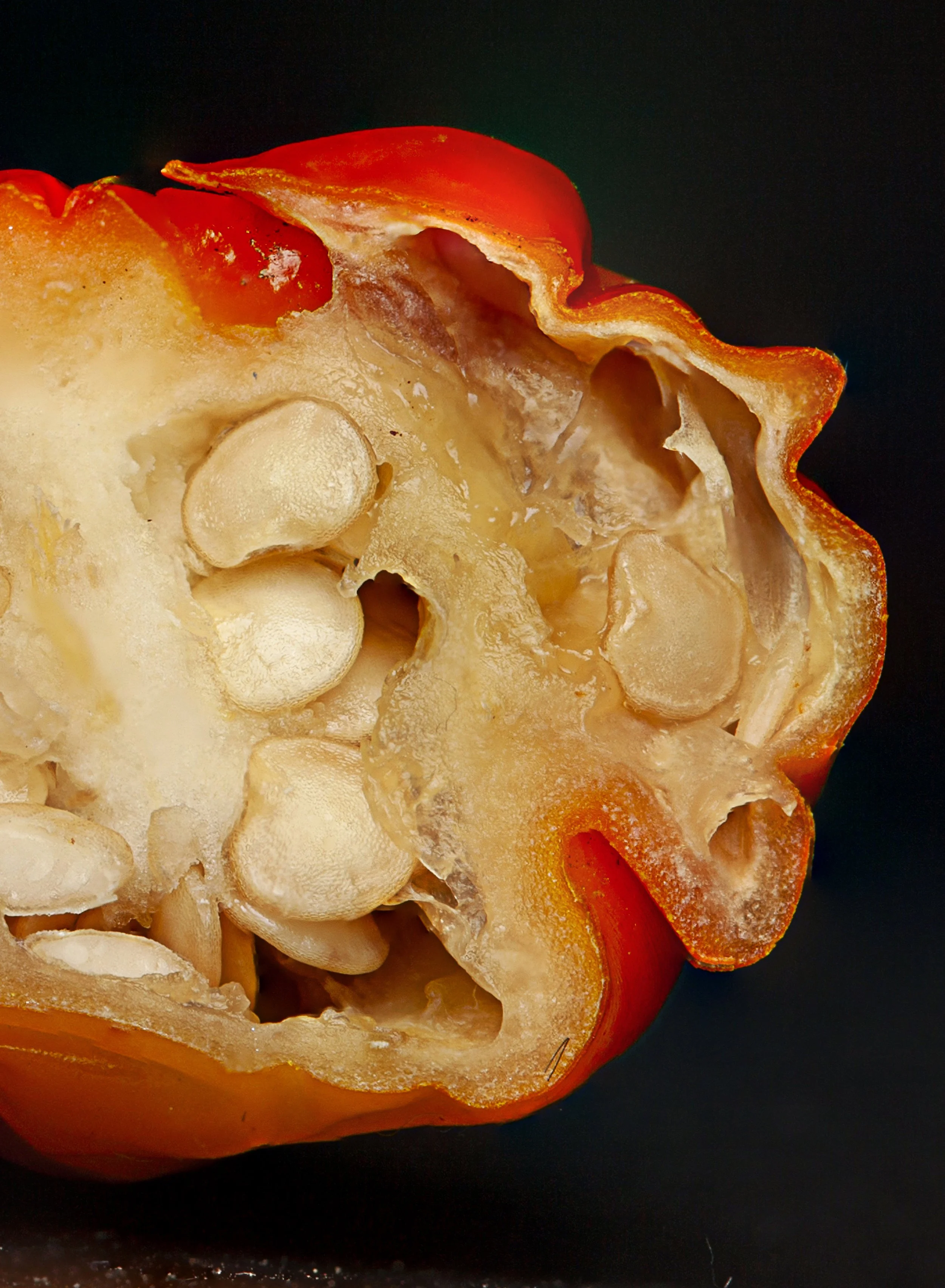
Image Specifications –
Seed Pod- Size of a Quarter - Macro Study
Camera: Canon EOS 5D Mark IV
Lens: Canon Macro 100mmExposure Settings:
ISO: 100
Aperture: f/8
Shutter Speed: 1/60 sec
Focus Stacking: 12-image stack
Lighting: Macro Photography Flash Diffuser with Speedlite Flash Diffuser Softbox
Stability: Tripod-mounted; timer, macro rail
Processing: Focus stack blended in Photoshop
Description: This macro capture documents a pepper seed pod approximately 24–26 mm in diameter, photographed to evaluate fine-surface detail, material texture, and structural integrity at close range. The soft outer shell, resembling a brain, exhibits micro-level striations and edge fraying, providing a clear demonstration of the lens’s resolving capability and the controlled lighting setup’s ability to manage specular highlights on irregular surfaces. Internal seed structures show uniform curvature with minimal surface reflectance.
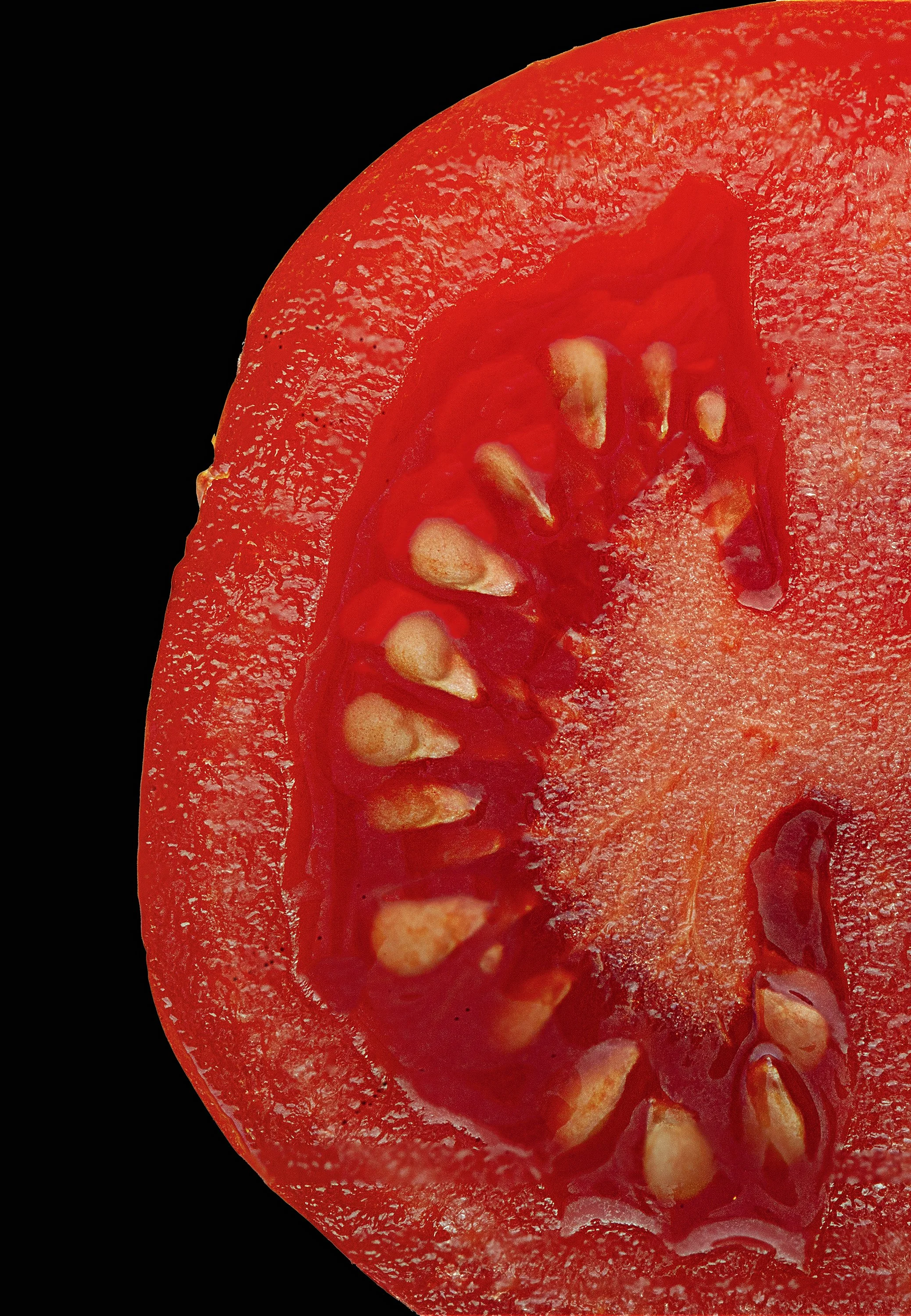
Image Specifications –
Tomato Slice Transparency & Texture Macro Study:
Camera: Canon EOS 5D Mark IV
Lens: Canon Macro 100mmTechnical Settings:
• Aperture: f/8
• Shutter Speed: 1/125 sec
• ISO: 200
• Focus Method: 20-frame multi-stack
• Lighting: Macro Photography Flash Diffuser with Speedlite Flash Diffuser Softbox to control sheen and enhance internal glow
• Stabilization: Tripod + macro rail
• Lens & Magnification: Macro lens at close-focus distance
Description: A close-focus macro examination of a fresh tomato slice, highlighting the translucent flesh, seed chambers, and intricate internal membranes. This study emphasizes the way light passes through the watery cell structure, revealing subtle gradients, glossy highlights, and tiny reflective hotspots along the juice-filled surfaces. Precise stacking maintains sharpness from edge to core while preserving the natural softness and organic geometry of the slice.
Click here to return to the portfolio pages