Component & Material Detail (Macro)
Imaging Objective
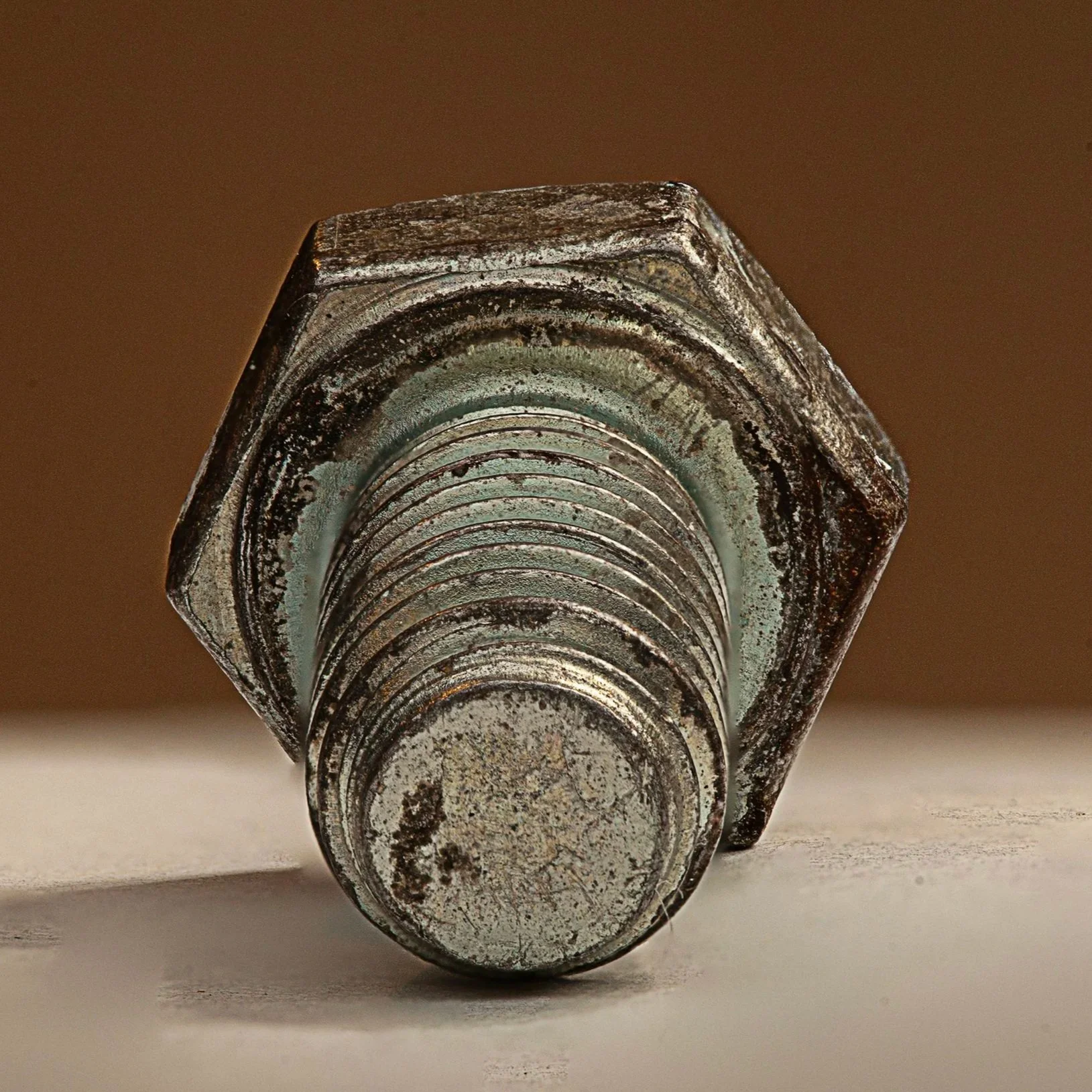
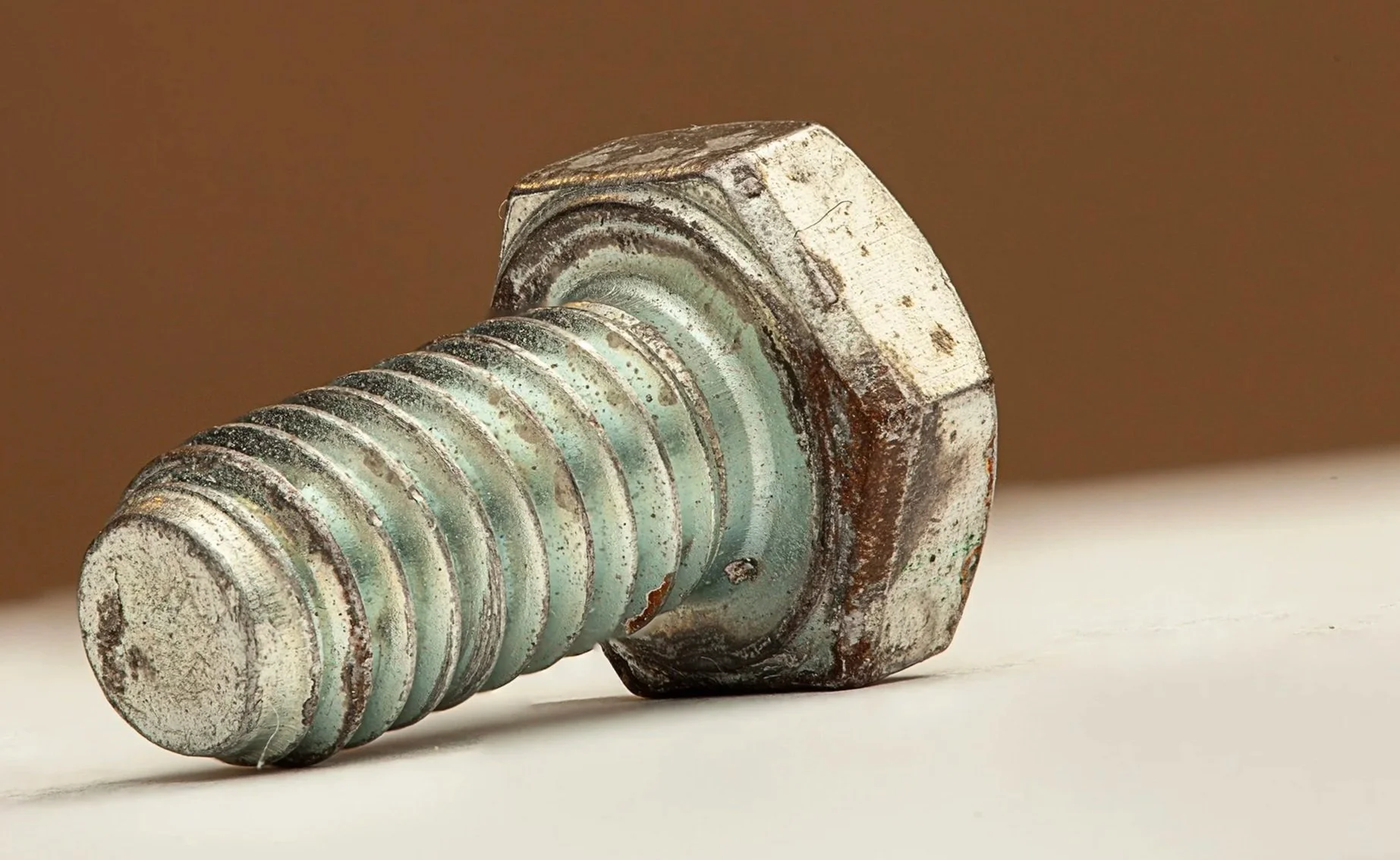
Document thread geometry, machining marks, and surface oxidation on a hex head fastener for component inspection and material condition evaluation.
Imaging Methodology
High-magnification macro capture using diffused lighting to reveal thread profiles, hex head geometry, and surface texture.
Visual Observations
• Hex head fastener with intact thread geometry
• Visible machining marks across hex head surface
• Surface oxidation and minor corrosion present along threads and head
• No evidence of thread deformation or structural failure observed
Engineering Interpretation
Observed corrosion and surface wear are consistent with environmental exposure. Structural geometry of the fastener remains intact in the documented region.
Use Case
Supports component inspection, fastener condition documentation, and corrosion evaluation.
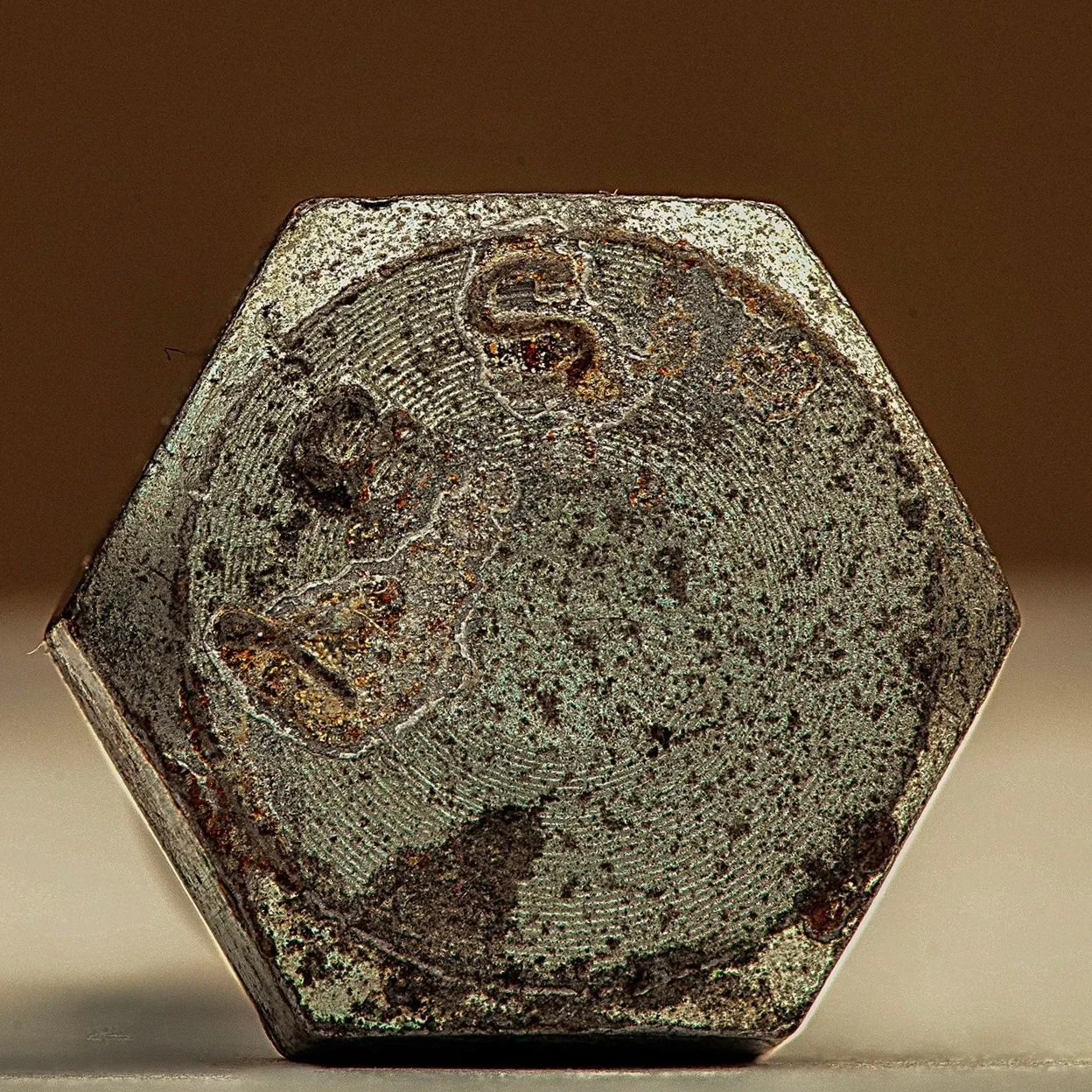
Hex Head Bolt – Thread Geometry & Surface Condition Study
Image Specifications
Camera: Canon EOS 5D Mark IV
Lens: 2× Macro Lens
Exposure: ISO 100 | f/13 | 1/160 sec
Lighting: Diffused flash to control metallic reflections
Stability: Tripod-mounted camera with remote timer
Processing: Focus stack composited in Adobe Photoshop with tonal normalization. No structural alterations applied.
Imaging Objective
Document the carburetor adjustment screw, spring retention system, and thread interface for inspection of wear, contamination, and mechanical integrity.
Imaging Methodology
High-magnification macro capture using diffused directional lighting to reveal thread geometry, spring structure, and surface condition.
Visual Observations
• Threaded adjustment screw with integrated tension spring
• Spring coils continuous along full visible length
• Surface debris and particulate accumulation observed on spring and screw surfaces
• Minor oxidation visible on exposed metallic areas
• No evidence of fracture, thread stripping, or spring deformation observed
Engineering Interpretation
Observed debris accumulation and surface oxidation are consistent with operational exposure within a carburetor assembly. Structural features of the adjustment screw and spring retention mechanism remain intact in the documented region.
Use Case
Supports component inspection, carburetor adjustment mechanism documentation, and service reference imaging.
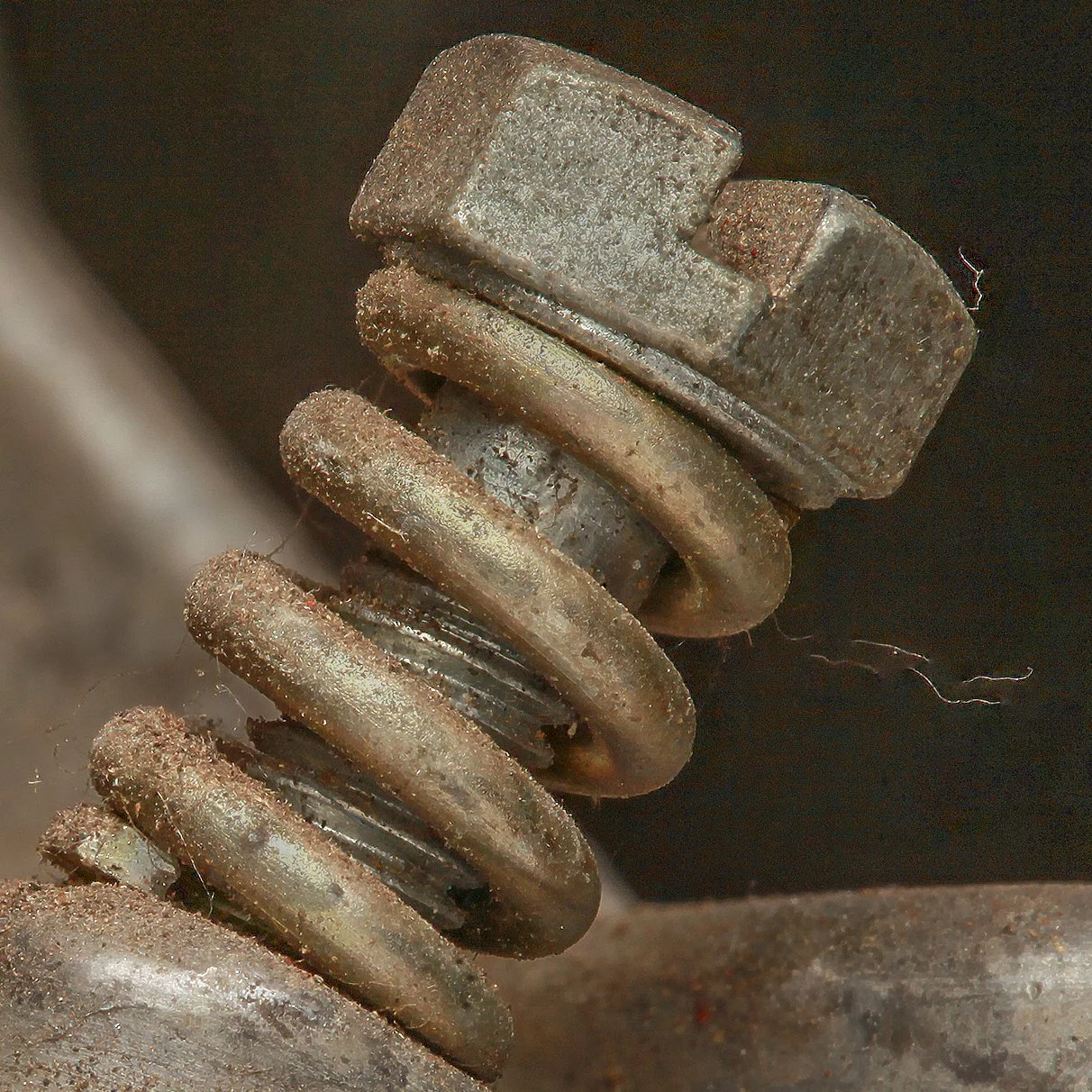
Carburetor Adjustment Screw Assembly – Spring Retention & Thread Condition
Image Specifications
Camera: Canon EOS 5D Mark IV
Lens: 2× Macro Lens
Exposure: ISO 100 | f/13 | 1/160 sec
Lighting: Diffused flash to control reflections on metallic surfaces
Stability: Tripod-mounted camera with remote timer
Processing: Focus stack composited in Adobe Photoshop with tonal normalization. No structural alterations applied.
Imaging Objective
Document the stamped steel retention bracket, weld joint, and fastener interface for component inspection and assembly interface evaluation.
Imaging Methodology
High-magnification macro capture using diffused directional lighting to highlight stamped metal contours, weld geometry, and surface condition.
Visual Observations
• Stamped steel bracket with formed retention slot
• Weld joint visible along upper bracket interface
• Fastener mount geometry intact
• Minor oxidation and surface debris present
Engineering Interpretation
Observed weld geometry and bracket structure are consistent with stamped and welded sheet-metal retention components used in mechanical and automotive assemblies.
Use Case
Supports component inspection, weld documentation, and assembly interface evaluation.
Imaging Objective
Document the slotted fastener and surrounding sheet metal interface for inspection of surface condition, corrosion, and fastener integrity.
Imaging Methodology
High-magnification macro capture using diffused lighting to reveal fastener slot geometry, surface texture, and oxidation patterns.
Visual Observations
• Slotted head fastener seated within stamped metal bracket
• Surface oxidation visible on fastener head and surrounding metal
• Slot geometry intact with minor wear along edges
• No evidence of cracking, deformation, or fastener displacement observed
Engineering Interpretation
Observed corrosion and surface wear are consistent with environmental exposure and normal operational aging of mechanical fasteners within metal assemblies.
Use Case
Supports component inspection, fastener condition documentation, and assembly interface analysis.
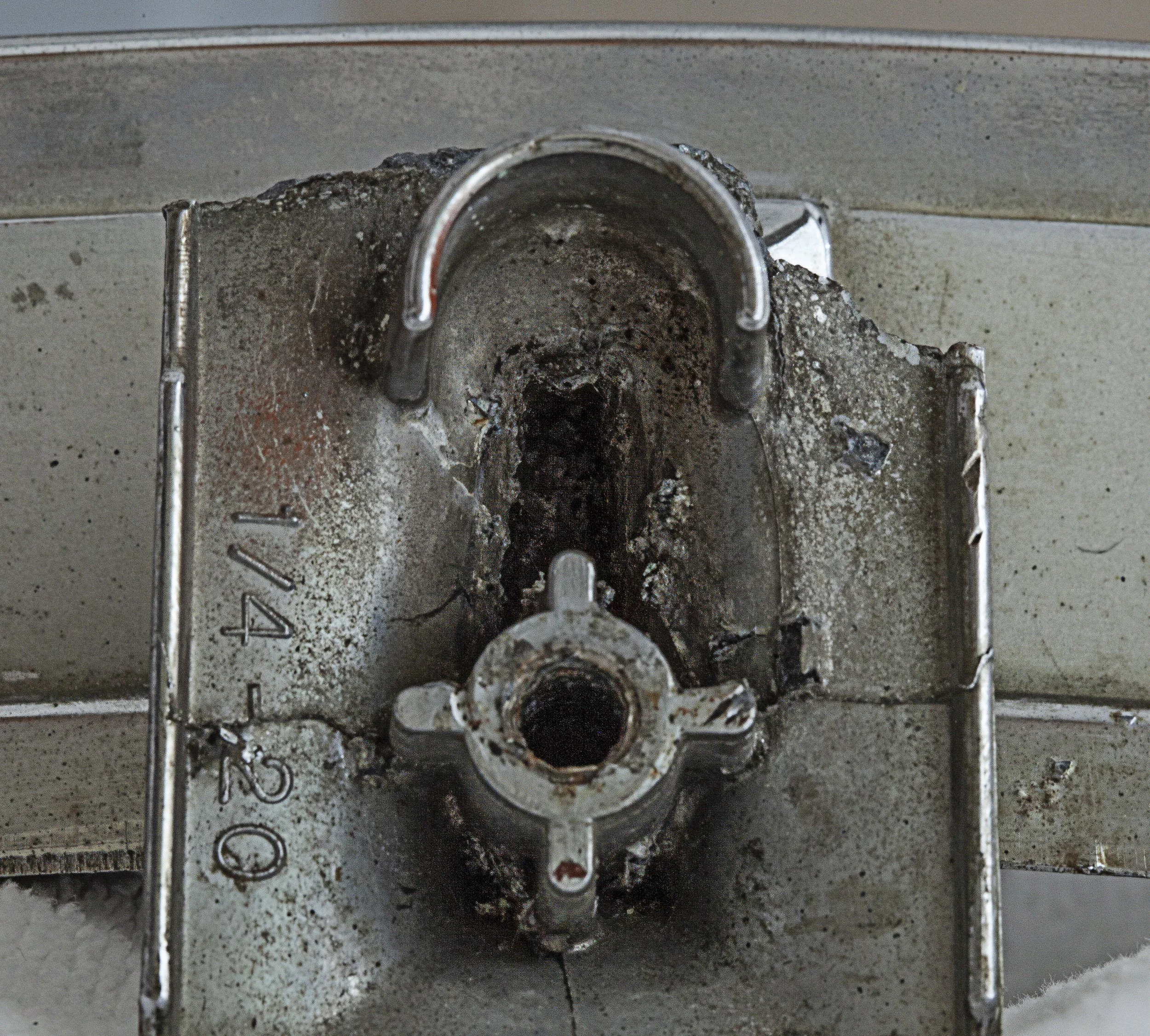
Stamped Steel Retention Bracket – Weld Joint & Fastener Interface Detail
Image Specifications
Camera: Canon EOS 5D Mark IV
Lens: 2× Macro Lens
Exposure: ISO 100 | f/13 | 1/160 sec
Lighting: Diffused flash to control metallic reflections
Stability: Tripod-mounted camera with remote timer
Processing: Tonal normalization applied for accurate surface representation. No structural alterations applied.
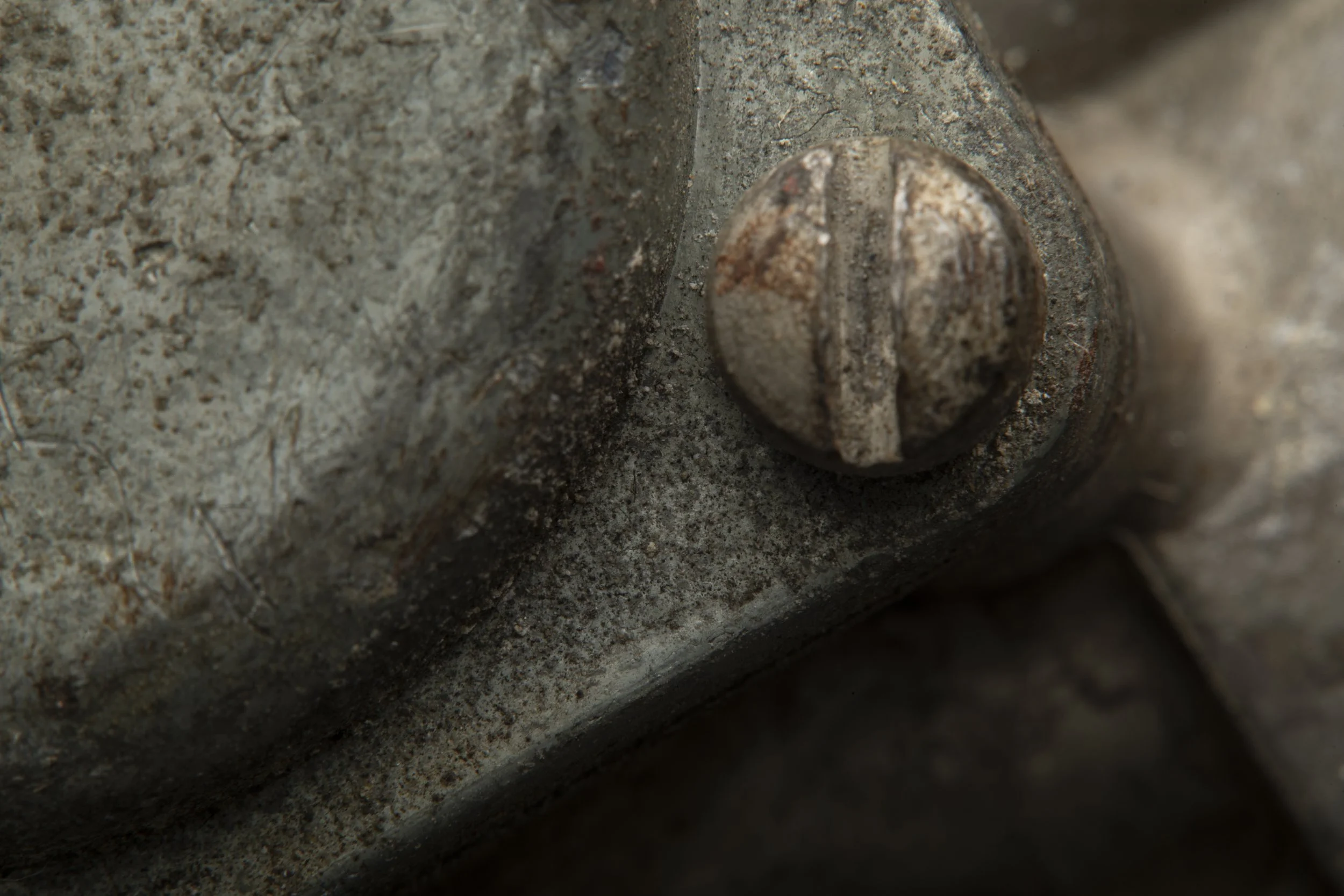
Slotted Fastener Interface – Surface Condition Inspection
Image Specifications
Camera: Canon EOS 5D Mark IV
Lens: 2× Macro Lens
Exposure: ISO 100 | f/13 | 1/160 sec
Lighting: Diffused flash to control reflections on metallic surfaces
Stability: Tripod-mounted camera with remote timer
Processing: Focus stack composited in Adobe Photoshop with tonal normalization. No structural alterations applied.
To Return to the Portfolio, Click Here: